
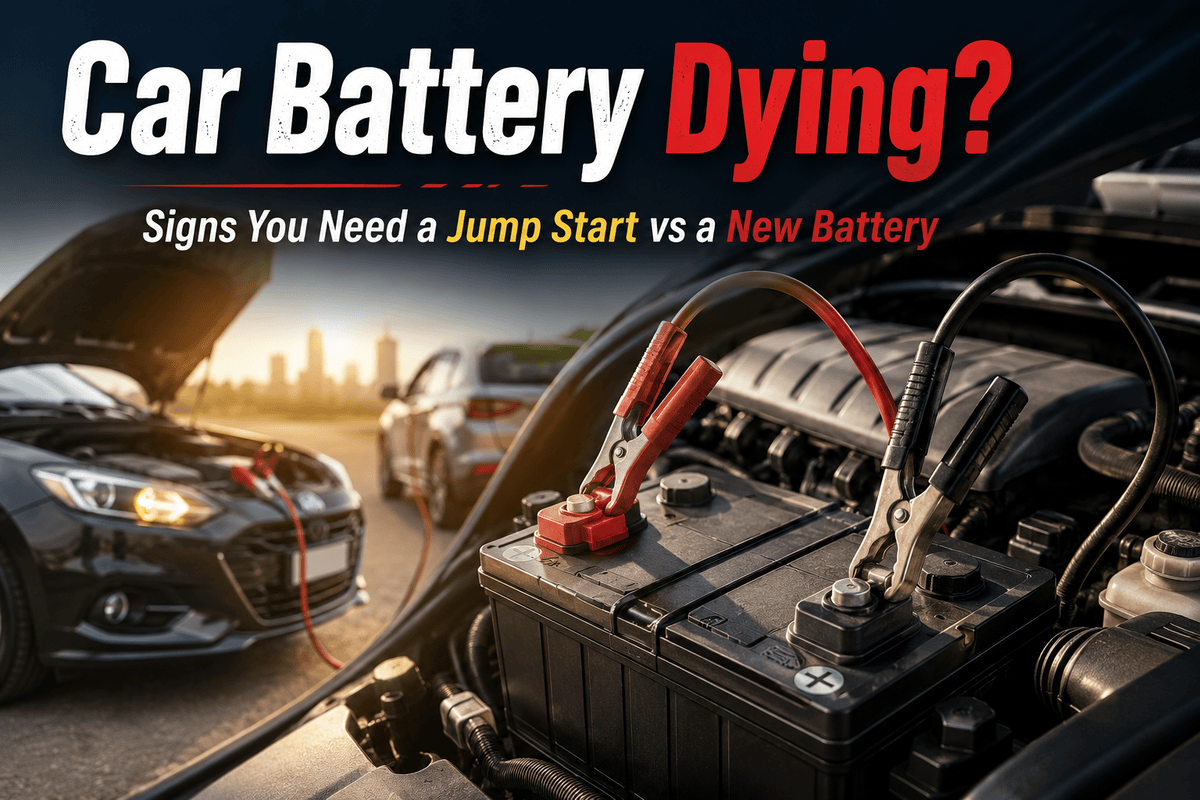
A car that suddenly refuses to start can leave you wondering what went wrong. Sometimes, the battery has simply lost its charge. Other times, it has reached the end of its useful life and needs to be replaced.
Drivers should know the difference to save time and prevent the same problem from happening again. If you are looking for a car battery jump start Seattle drivers can use when stranded, the first step is figuring out why the battery died.
A jump start can help when the battery is discharged but still capable of holding a charge.
For example, leaving the headlights or interior lights on can drain the battery while the engine is off. A vehicle that has been sitting unused for a long period can also lose its charge. Infrequent driving can also contribute to a dead battery.
A jump start may be enough when:
Getting the engine running again, however, does not prove that the battery is healthy. If the same issue happens again, the battery and charging system should be checked.
Your vehicle can sometimes give you warning signs before the battery fails completely. Recognizing these dead battery signs can help you deal with the problem before you are stranded.
One of the most common warning signs is a slower-than-usual engine crank. You may notice that the starter takes longer to turn the engine over when you start the vehicle. A consistently slow start can indicate that the battery is losing its ability to provide enough power.
Hearing repeated clicks when you turn the key or press the start button can mean the starter is not receiving enough power. A weak battery is one possible cause. However, a single click can also point to a starter problem. That is why the sound alone cannot confirm that the battery needs replacing.
Weak headlights, dim dashboard lighting, or other electrical issues can occur when the battery is struggling. If lights flicker while the engine is running, the problem may instead involve the alternator, wiring, or another part of the charging system.
Needing a jump once after accidentally draining the battery is not necessarily a major concern. Needing jump starts repeatedly is different. It can mean that the battery is no longer holding a charge. An alternator or another electrical fault can produce similar symptoms, so repeated failures should be diagnosed rather than solved with another jump every time.
White, blue, or green buildup around the battery terminals can interfere with the electrical connection. Corrosion does not automatically mean the battery needs replacement, but it is a reason to inspect the battery and connections.
A battery case that looks swollen, cracked, or deformed is a more serious warning sign. Do not try to jump a visibly damaged battery. A damaged battery should be handled by someone who can assess it safely.
A strong rotten-egg smell around the battery can indicate a battery problem. If you notice this along with other warning signs, avoid treating the situation as an ordinary dead battery and have it inspected.
There is no single date when every battery needs to be replaced. Battery life depends on the battery itself, vehicle use, climate, and maintenance. Many automotive sources put typical battery life around three to five years, although some batteries can last longer and others can fail sooner.
Knowing when to replace a car battery becomes easier when you consider both its age and its condition.
Replacement is worth considering when:
If the battery is older and already showing several of these symptoms, replacing it before complete failure can help prevent an unexpected breakdown.
Situation | What may be needed |
Lights were accidentally left on | Jump start and battery check |
Car sat unused for a long time | Jump start and battery test |
Battery is several years old | Test and possible replacement |
Engine has been slow to crank | Battery test and possible replacement |
Car repeatedly needs jumps | Battery and charging-system inspection |
Battery case is swollen or cracked | Professional assessment; do not jump |
Battery starts after a jump but dies again | Check battery and charging system |
The key is to identify the cause rather than assume every no-start situation requires a new battery.
A dead battery is not always caused by the battery itself. The alternator charges the battery while the engine runs. If the charging system is not working correctly, a jump start may get the vehicle moving temporarily, but the battery can become discharged again.
This is why a vehicle that repeatedly loses power should receive a proper battery and charging-system inspection. Replacing the battery without addressing a faulty charging system could leave you with another dead battery.
If your vehicle starts after a jump, pay attention to what happens next. If the battery was drained because you left a light on, the problem may not return. If the battery is old or has already been showing warning signs, arrange a battery test rather than assuming everything is fixed.
A short drive is not proof that an aging battery has recovered. Experts recommend having a struggling or older battery tested because a jump start cannot restore a battery that has lost its ability to hold a charge.
If the vehicle will not stay running, will not restart, or repeatedly needs another jump, professional roadside or automotive assistance is a better option than continuing to guess.
Also Read our Blog – How Much Does Roadside Assisstance Cost in Seattle?
A roadside service can be useful when you are stranded and cannot safely diagnose the problem yourself.
Consider calling for help when:
A failed jump does not automatically mean the battery is completely dead. The starter, alternator, cables, connections, or another electrical component could be responsible.
Regular battery checks can reduce the chance of being caught off guard. If your battery is more than three years old, testing it periodically can help identify declining performance before it becomes a starting problem. Keep connections secure and watch for corrosion or other visible issues.
Driving habits are important too. Long periods without driving can allow a battery to discharge, while frequent short trips may not give the charging system enough time to fully replenish the battery.
If you replace an old battery, dispose of the old one properly. Seattle accepts vehicle batteries at designated household hazardous-waste facilities, and vehicle batteries can also be recycled at the city’s transfer stations.
A jump start can solve a temporary loss of power, but it cannot repair a battery that has reached the end of its life. Slow cranking, repeated jump starts, dim lights, corrosion, unusual smells, and an aging battery can all signal that further testing is needed.
The best approach is to look at the full picture. If the battery was accidentally drained and is otherwise healthy, a jump may be all you need. If it repeatedly fails or cannot hold a charge, replacement is more likely.
When you need a car battery jump start Seattle drivers can count on, getting the engine running is only the immediate solution. Finding out why the battery died can help keep you from facing the same problem again. AutoTroop provides roadside assistance options for drivers who need help getting back on the road.