
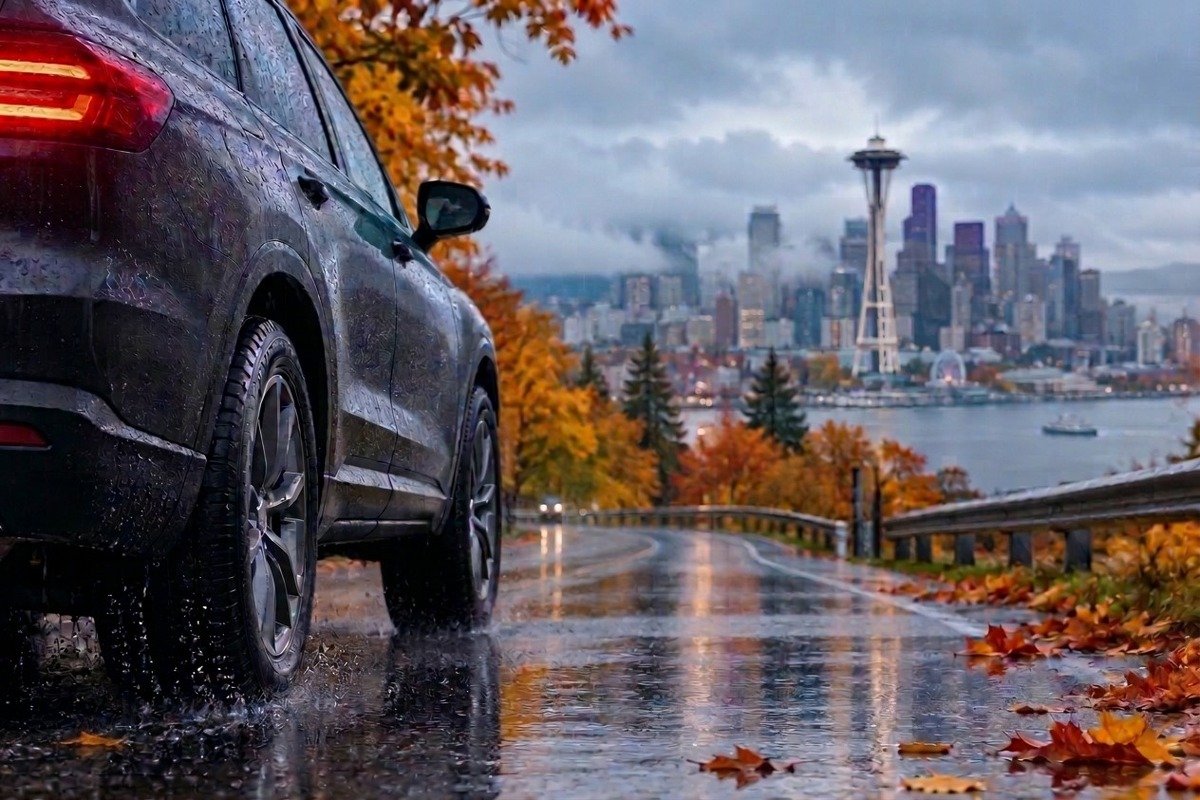
Seattle’s fall weather can bring frequent rain, slick roads, reduced visibility, and standing water. A vehicle that handles well in dry weather need more attention once wet conditions become routine. Before the rainy season gets underway, check the parts of your car that have the biggest effect on traction and reliability. Tires and the battery should be the first things to start. Don’t forget the wipers, lights, and brakes because these parts also deserve a quick inspection.
Your tires are the only part of the vehicle constantly touching the road. Their condition matters even more when water covers the pavement.
Start by checking the tread. Worn tread has less ability to move water away from the contact patch, increasing the risk of losing traction on wet roads. Experts recommend tire replacement when tread depth reaches 4/32 of an inch because wet-road performance can decline before tires reach the legal wear limit.
Look for:
If one tire is wearing faster than the others, the issue involves alignment, inflation, suspension, or wheel balance. It is worth having the cause checked rather than simply replacing the worn tire.
Facing a flat tire issue on the road? Autotroop provides flat tire repair services to get your flat tire repaired on the spot within minutes.
Rainy weather is not the time to ignore tire pressure.
Check all four tires when they are cold and compare the readings with the vehicle manufacturer’s recommended pressure. Do not use the maximum pressure printed on the tire sidewall as the target unless the vehicle manufacturer specifies it.
Correct inflation helps the tires maintain their intended contact with the road and properly channel water through the tread. Remember to check the spare if your vehicle has one.
Hydroplaning happens when water builds up between the tire and road surface, reducing traction and steering control.
Speed, tire condition, tread depth, and the amount of water on the road all affect the risk. Even tires with good tread can lose some contact with the pavement in sufficiently wet conditions.
To reduce the risk:
If the vehicle starts to hydroplane, ease off the accelerator and avoid sudden braking or steering. Allow the tires to regain contact with the road.
Seattle’s fall temperatures are not as severe as those in colder parts of the country, but a weak battery can still become a problem as temperatures drop.
If your battery is already struggling to start the engine, fall is a good time to have the battery and charging system tested.
Pay attention to signs such as:
Always make a habit of checking the battery and charging system as part of seasonal vehicle maintenance. It is also advised to keep battery terminals and cable connections clean and secure.
A battery test can identify a weakening battery before it leaves you dealing with a no-start situation during a rainy morning commute.
If you ever face a dead battery issue anywhere on Seattle roads, don’t forget Autroop – they revive the dead battery instantly using battery jumpstart during an emergency situation.
Good tires won’t help much if rain makes it difficult to see the road. Replace wiper blades if they leave streaks, skip across the windshield, or fail to clear water properly. Also check that the headlights, brake lights, taillights, and turn signals are working.
Weather guidance recommends replacing old or brittle wipers and regularly checking vehicle lighting before driving in rain.
Keep the windshield washer reservoir filled as well. Road spray can quickly cover the windshield with dirt and reduce visibility.
Wet pavement can increase stopping distances and make sudden maneuvers more difficult.
Leave additional following distance and reduce your speed when conditions become poor. Avoid aggressive braking, sharp turns, and sudden lane changes.
If rain becomes heavy enough that you cannot see clearly or maintain control, find a safe place to stop rather than continuing to drive through dangerous conditions.
Standing water deserves particular attention. Never assume a flooded section of road is safe to cross because the water appears shallow. Water depth can be difficult to judge, and flooding can conceal road damage or other hazards.
Before the wet season, take a few minutes to check:
These checks do not take long, but they can prevent problems before they become roadside issues.
Fall rain is a normal part of driving in Seattle, but wet roads require a vehicle that is ready for the conditions.
Start with the basics: check tire tread and pressure, test an aging battery, replace worn wipers, and make sure your lights work. Once you are on the road, slow down when conditions require it, leave extra space, and avoid standing water.
A little preparation before the rainy season can make daily driving more predictable and help reduce the chance of a preventable breakdown or loss of traction.
Frequently Asked Questions
Check tire pressure at least once a month and before longer trips. Check when the tires are cold and follow the pressure listed by the vehicle manufacturer.
All-season tires can be suitable for many Seattle drivers, but their condition matters. Tread depth, tire age, inflation, and overall condition have a major effect on wet-road performance.
Replace them when they leave streaks, skip across the glass, squeak excessively, or fail to clear rain properly. There is no need to wait for a specific season if visibility is already affected.
Slow starting can indicate a weak battery, poor electrical connections, or a charging-system problem. A battery and charging-system test can help identify the cause.
It is better to avoid cruise control on wet roads. Maintaining direct control over acceleration can make it easier to respond if the tires begin to lose traction.