
A low tire pressure warning can appear without much notice, especially when temperatures change or a tire has developed a slow leak. For Seattle drivers, ignoring the warning can become a bigger problem on wet roads, busy city streets, or during a daily commute.
The first step is simple: check the tire pressure as soon as it is safe to do so. If a tire is significantly underinflated or damaged, avoid continuing to drive until the problem has been assessed.
The Tire Pressure Monitoring System (TPMS) uses sensors to monitor tire pressure and alert you when pressure drops below the vehicle’s specified level.
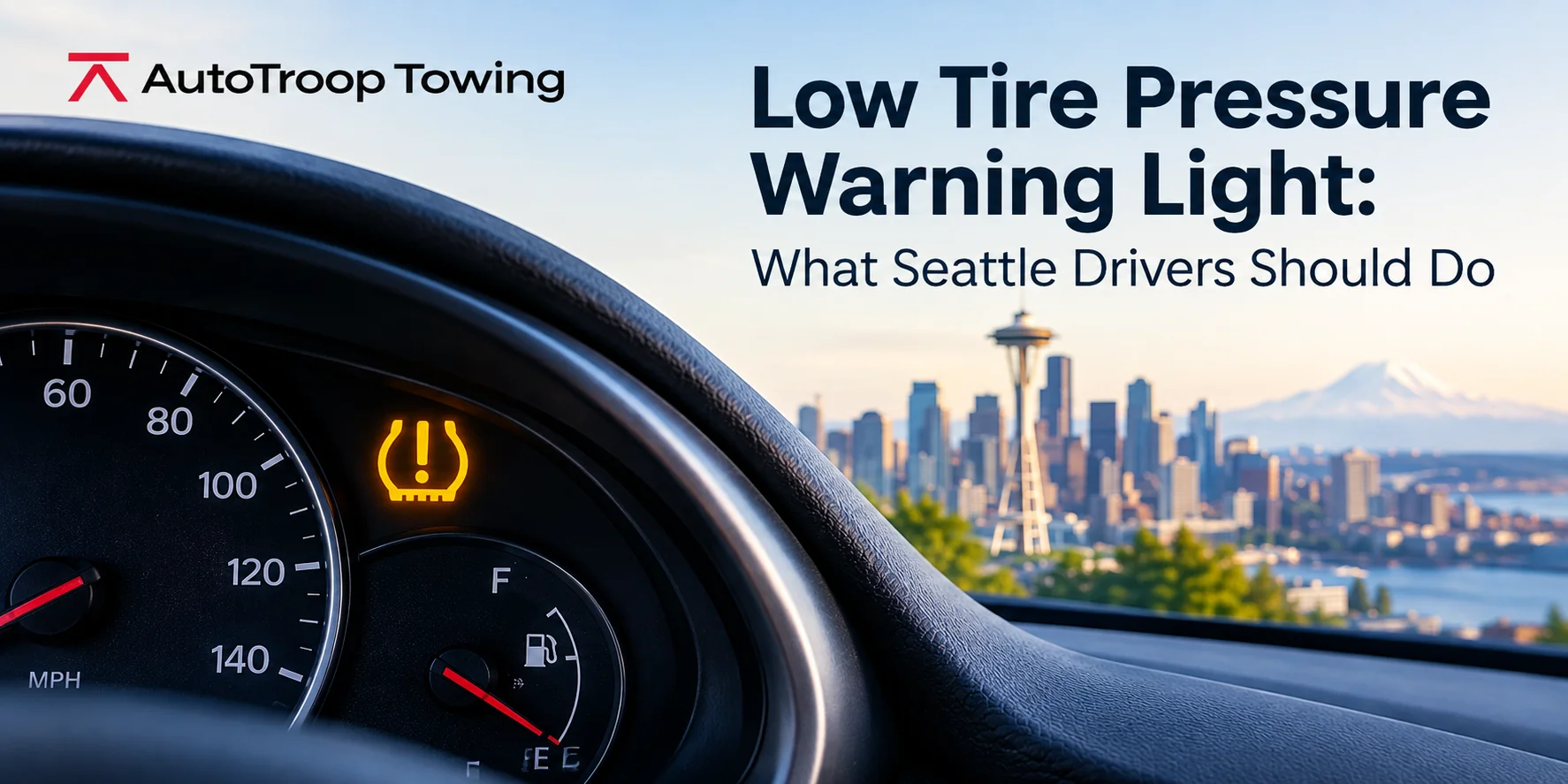
The warning symbol usually looks like a horseshoe with an exclamation mark in the middle.
When the light stays on, check the pressure in all four tires. The correct inflation pressure is normally listed on the driver’s-side door-jamb label or in the owner’s manual. Washington’s driver guidance also advises checking tire pressure and notes that low pressure can affect vehicle handling.
A flashing TPMS light can indicate a problem with the monitoring system itself. Check your vehicle’s manual if the warning behaves differently from a steady warning light.
A tire can lose pressure for several reasons. Some are temporary, while others require a tire inspection.
Common causes include:
Temperature changes can affect tire pressure. As temperatures fall, tire pressure can decrease, which may cause the TPMS warning to appear.
However, don’t assume temperature is always the reason. If one tire continues losing pressure, it may have a leak.
If the warning appears while you’re driving in Seattle, don’t panic or make a sudden stop in traffic.
Instead:
If the tire looks severely deflated, has visible damage, or the vehicle starts pulling or vibrating, don’t keep driving simply because the tire can still move.
There is no fixed distance that is safe to drive with a low-pressure warning. It depends on how much pressure the tire has lost and whether there is damage.
A tire that is only slightly below its recommended pressure may be driven carefully to a safe location for an air refill. A severely underinflated or damaged tire is a different situation.
Low tire pressure can affect handling and speed, while worn tires can increase the risk of slipping on wet roads.
If you notice unusual steering, vibration, a strong pull, or a visibly flat tire, stop driving and arrange for roadside assistance or tire repair.
You don’t necessarily need to visit a repair shop just to check tire pressure. Many drivers use an air pump with a built-in pressure gauge. You can also use a separate tire-pressure gauge.
Check the tires when they are cold for the most useful reading. Then inflate them to the pressure specified by the vehicle manufacturer.
Don’t use the maximum PSI printed on the tire sidewall as your normal target. That number isn’t necessarily the recommended pressure for your vehicle.
A tire air refill service can be useful when a tire has lost air but does not show signs of serious damage.
For example, you may need a refill if:
The important part is to determine why the tire lost pressure.
If the same tire needs air repeatedly, an air refill only addresses the symptom. The tire should be checked for a puncture, valve leak, wheel issue, or other source of air loss.
A flat tire should not be treated like a simple low-pressure situation.
Do not continue driving on a flat tire unless the vehicle manufacturer specifically allows it under the conditions involved. Driving on a severely deflated tire can damage the tire and, in some cases, the wheel.
If you are stranded in Seattle, a mobile tire service or roadside assistance option can be useful when you cannot safely drive to a tire shop.
Depending on the problem, the service may involve tire inflation, a temporary repair, tire replacement, or another solution.
Seattle’s frequent rain makes tire condition particularly important.
Worn tires can contribute to slipping and sliding on wet pavement, while low tire pressure can affect handling. Washington’s Driver Guide specifically advises drivers to maintain proper tire pressure and adequate tread.
When roads are wet, slow down when necessary and leave additional space between vehicles. If water is collecting on the road, be especially cautious about hydroplaning.
Good tire pressure cannot prevent every wet-weather hazard, but maintaining the correct pressure is an important part of keeping your vehicle ready for Seattle driving conditions.
Don’t keep adding air to the same tire without finding the cause.
Have the tire inspected if:
A professional inspection can determine whether the tire needs repair, replacement, or simply another air refill.
A TPMS warning is a reason to check your tires, not a light to ignore. Check the actual pressure, inflate the tire to the manufacturer’s recommended level, and look for signs of damage or a slow leak.
If the tire keeps losing air, get the underlying problem checked. And if you are dealing with a flat or damaged tire while you are on the road, AutoTroop can help Seattle drivers with roadside assistance and tire-related roadside needs.
Frequently Asked Questions
Yes. Lower temperatures can reduce tire pressure and trigger the warning. Check the actual pressure and adjust it to the vehicle manufacturer’s recommended level.
One low tire can indicate a puncture, valve leak, wheel issue, or other localized problem. If it repeatedly loses pressure, have it inspected.
Check it regularly and before longer trips. Monthly checks are a useful baseline, but inspect the pressure sooner if the TPMS warning appears or a tire looks low.
Not always. Some vehicles update automatically after driving, while others may require a TPMS reset. Follow the procedure in your owner’s manual.
An air refill can restore pressure temporarily, but it does not repair the cause of a slow leak. A tire that repeatedly loses air should be inspected and repaired or replaced when necessary.