
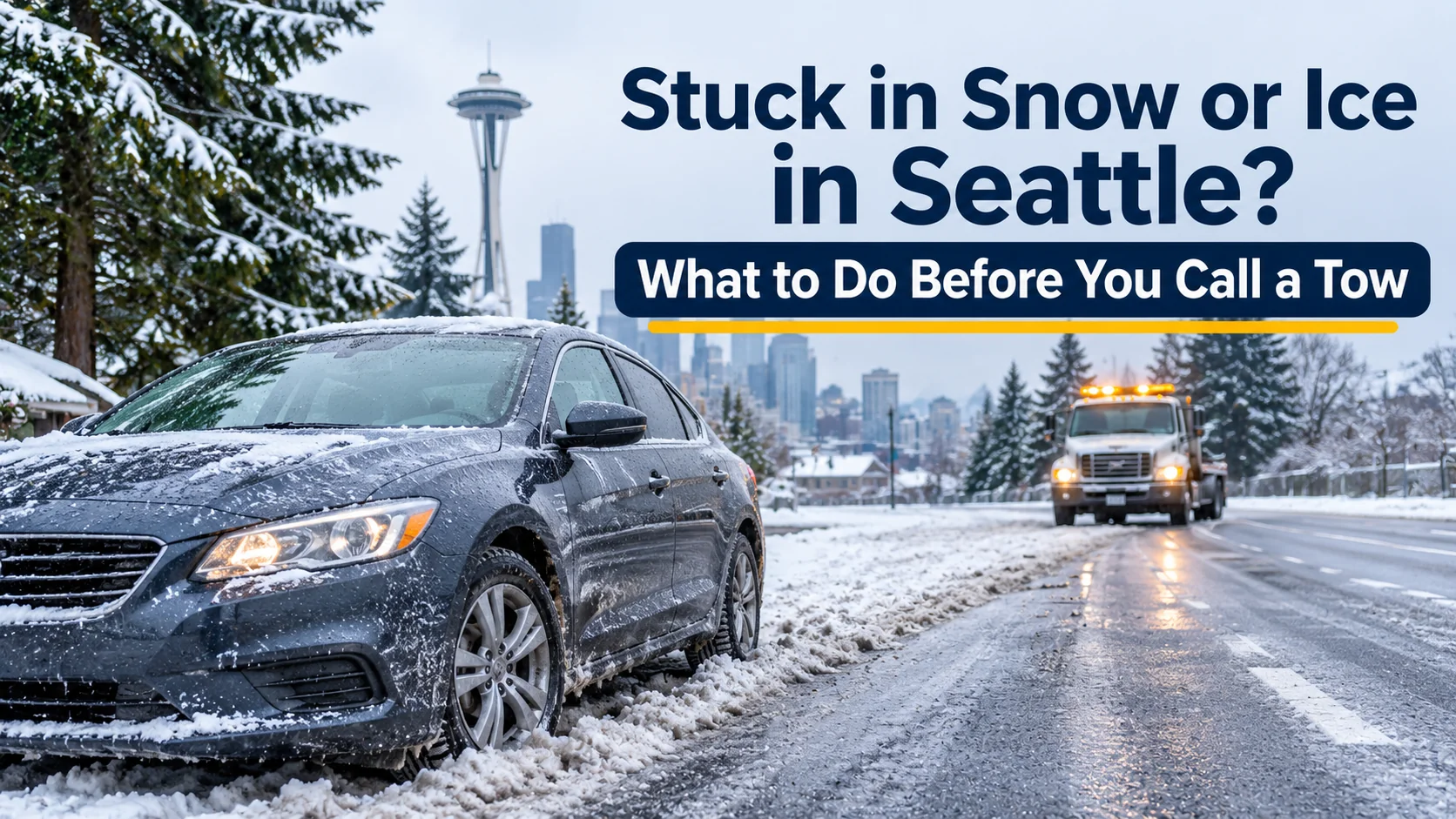
Getting your car stuck in snow can turn a short drive into a stressful situation. Seattle drivers face this problem during winter weather, especially on steep residential streets, driveways, and untreated roads. Ice makes the situation harder because tires can lose traction even when the road looks clear.
If your car is stuck in snow or ice in Seattle, avoid pressing the accelerator harder. Spinning tires can dig deeper into the snow and make it more difficult to move. A few simple steps may help you regain traction. However, some situations require professional roadside assistance.
Seattle does not experience heavy snowfall every winter. However, even a small amount of snow or ice can create difficult driving conditions.
Several factors contribute to the problem:
These conditions can leave a vehicle unable to move, even when its engine is running properly.
Before calling a tow truck, check whether your vehicle is safely positioned and whether you can regain traction without putting yourself or others at risk.
Pressing the accelerator harder does not help when your tires have lost traction. It can make the situation worse by digging the tires deeper into the snow.
Take your foot off the accelerator and let the wheels stop spinning. Avoid sudden steering or braking movements.
If it is safe to get out, check the area around your vehicle.
Use a small shovel to remove snow from:
Also, check the exhaust pipe and clear away any snow blocking it before running the engine. Never stand in moving traffic or work around a vehicle that could slide down a slope.
Loose snow and ice make it difficult for tires to grip the road. Adding a rough material around the drive wheels may help.
You can try:
Place the material where the drive wheels need traction. Apply gentle acceleration and stop if the tires begin spinning again.
If the vehicle is on level ground and the area is clear, gentle movement may help.
Avoid aggressive rocking or repeated acceleration. It can strain the transmission and worsen the situation.
If your vehicle has a snow or traction mode, check the owner’s manual for the correct setting.
Driving on snow-covered hills requires extra care. A vehicle that moves easily on flat roads may struggle on an icy slope.
Keep these points in mind:
If your car starts sliding backward, avoid sudden steering or acceleration. Keep control of the vehicle as safely as possible and use the brakes according to your vehicle’s braking system.
Do not continue trying to climb a hill if the vehicle cannot maintain traction. A tow or professional recovery service may be the safer option.
Not every vehicle stuck in snow needs towing. However, continuing to attempt recovery can create additional problems.
Call for professional help if:
A professional can assess the situation and determine whether the vehicle needs recovery or towing.
You can also check the available tow truck service in Seattle if your vehicle cannot move safely.
Your safety matters more than getting the vehicle moving again.
If your car stops on a busy road:
If you become stranded during severe winter weather, staying inside the vehicle is generally safer than walking through snow or poor visibility.
Keep the exhaust pipe clear before running the engine. Run it only intermittently for warmth and slightly open a window to allow fresh air inside. Never run the engine in an enclosed space.
A little preparation can reduce the chances of getting stranded during winter weather.
Before driving in snowy conditions:
Getting a car stuck in snow or ice does not always mean you need a tow. Clearing snow, improving tire traction, and making small movements may help in suitable conditions.
However, do not risk damaging your vehicle or putting yourself in danger by repeatedly trying to get it moving. Deep snow, icy slopes, and unsafe roadside positions often require professional assistance.
If your vehicle remains stuck, contact AutoTroop for roadside assistance and towing support in Seattle. Get help when your car cannot move safely, and avoid taking unnecessary risks on slippery roads.
Frequently Asked Questions
Your tires may not have enough grip to move the vehicle. Loose snow, ice, worn tread, and unsuitable tires can all contribute to wheel spin. Stop accelerating and try improving traction around the drive wheels.
Yes. Sand and non-clumping cat litter can provide additional surface grip under drive wheels. Traction mats are another option. These materials may help, but they cannot guarantee recovery on deep snow or solid ice.
Driving on icy hills is risky because vehicles can lose traction while climbing or descending. Avoid steep roads when possible. If a road is icy, consider another route or delay your journey.
Call a tow truck if your vehicle is deeply stuck, cannot regain traction, is positioned dangerously, or may have suffered damage. Professional recovery is safer than repeated attempts that could worsen the situation.