
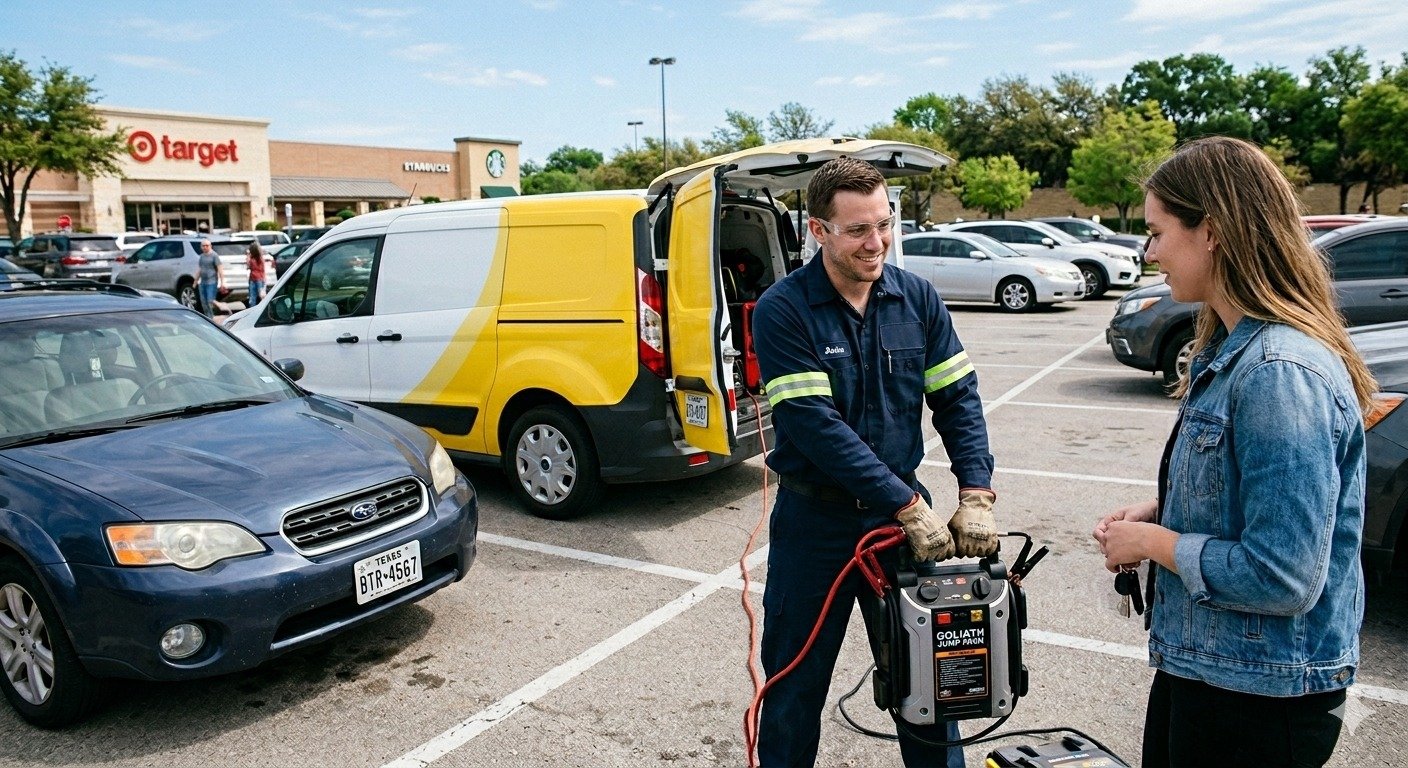
There’s never a good time for a dead battery, whether you are rushing to work on a cold Marysville morning, loading groceries in a parking lot, or heading out for a weekend drive. A vehicle that simply won’t start is frustrating, and for many drivers, the instinct is to look around helplessly for a stranger with jumper cables. The fact is that there is a much smarter, faster solution available, “On- site battery jumpstart Marysville,” where professional services come directly to you.
On-Site Battery Jumpstart Marysville services have become a go-to solution for drivers stuck in parking lots, driveways, or busy roads. The service restores power to your car at the location where it stops, without moving it to a garage.
A dead car battery strikes at the worst possible moment without giving any warning. Nearly 1 in 5 roadside emergencies across the U.S. involves a battery failure.
So let’s tell you more about this, what it actually is, and how it works!
Just imagine a situation, you were driving a car that suddenly stops, and now you are left there with keys in hand, the engine dead, and no help nearby. At such a situation, you can get help from an on-site battery jumpstart service. They send a trained technician directly to your location, equipped with professional-grade jump-starting equipment.
On-Site Battery Jumpstart Marysville is a mobile roadside service that restores power to a dead or weak car battery at your location. A trained and certified technician arrives with professional-grade jump equipment and safety tools. He assesses the battery and gets the vehicle running again right where it sits. A jumpstart can get your car running without needing another vehicle or towing.
On-Site Battery Jumpstart Marysville operates exactly this way. Local drivers get fast, professional help at their doorstep. This service is designed for everyday breakdown situations.
A professional jumpstart follows a clear and safe method. It is not just about attaching cables and hoping the car starts. Each step helps confirm that the battery is the real issue and that no damage happens to the vehicle.
The process is systematic and focused on safety, accuracy, and restoring power without damaging the vehicle’s electrical system. It involves checking the condition of the battery and confirming that a jump is actually the right solution.
Before anything is connected, the technician checks a few basic things:
Battery terminals for corrosion or loose clamps
A small voltage test is also sometimes done. A healthy battery usually reads around 12.6 volts. A much lower reading often confirms the battery is discharged.
This first step prevents mistakes. Sometimes a loose connection, not a dead battery, is the real cause.
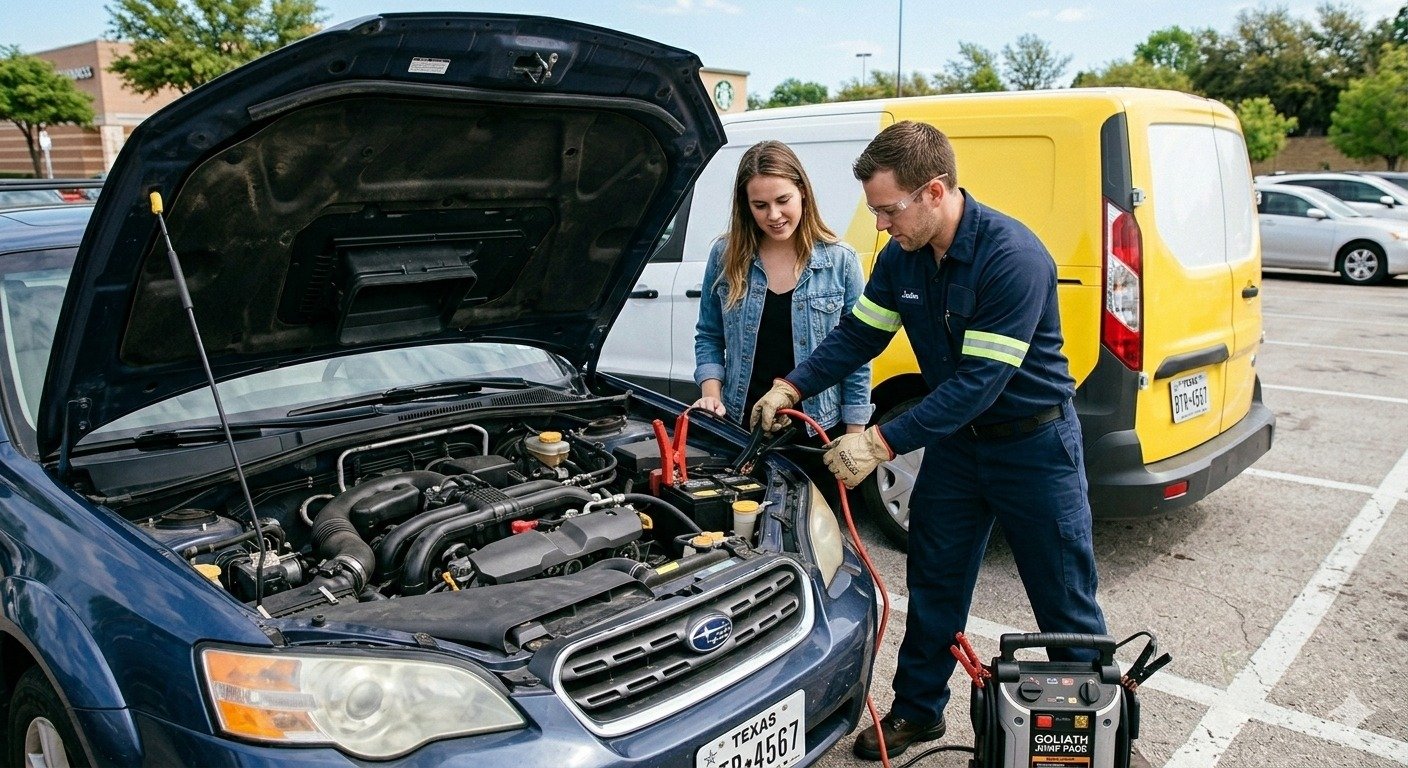
Professional services usually use a portable booster pack instead of another car. These units provide steady power and reduce the risk of electrical spikes.
The cables are attached in the correct order:
Correct placement is necessary. It lowers the risk of sparks and protects sensitive vehicle electronics.
Once everything is secure, power flows into the battery. The technician then tries to start the engine.
If the engine turns over smoothly, the battery was likely drained but still functional. If it struggles or does not respond, there may be a deeper issue such as a failing starter or completely worn-out battery.
After the car starts, the job is not finished. The charging system needs a quick check.
A properly working alternator should produce around 13.7 to 14.7 volts while the engine runs. This confirms the battery will recharge as you drive.
Without this step, drivers may face another breakdown shortly after leaving.
If the battery holds a charge, you can usually continue your trip safely.
If it does not, the technician explains the next step clearly. A battery replacement may be recommended, especially if it is older than three to five years.
A jumpstart is needed when your vehicle has a power loss, but the battery is not completely damaged. The signs are usually clear if you know what to look for.
Common Warning Signs
The engine cranks slowly when you turn the key
These symptoms often point to a drained battery rather than a major mechanical problem.
Certain everyday situations increase the risk:
Leaving headlights or interior lights on
Cold temperatures are a major factor. Battery power can drop significantly in winter, which is why many drivers face starting trouble on chilly mornings.
A jumpstart works best when:
The battery was working fine recently
If the engine still does not start after a proper jump, the issue may involve the starter, alternator, or electrical system. In that case, further inspection is needed.
A jumpstart is meant to give your battery enough power to start the engine and get you back on the road. It does not fix an old or damaged battery permanently. How long it lasts depends on several factors.
Battery Condition: A newer battery holds the charge longer, while an older battery may fail again within hours.
Most jumpstarts provide enough power to drive for a short distance or to reach a repair shop safely. If the battery is in good condition, it may last several days or weeks after recharging. However, if it is old or damaged, you may need a replacement soon. The drivers should know these minor details because this helps to plan their next steps and avoid getting stranded again.
A dead battery is never planned, but the response to it can be. Knowing what service to call and what to expect makes a real difference when the moment arrives.
On-Site Battery Jumpstart Marysville removes the guesswork entirely. A trained technician arrives at your location, handles the job safely, and gets you back on the road without unnecessary delays.
Keep the service number saved before you ever need it. A small step taken today can save a stressful hour tomorrow.
Battery health is easy to overlook until it becomes a problem. A quick check every few months, especially before winter hits Marysville, goes a long way.
Most batteries last three to five years; if yours is close to that mark, a professional inspection is worth the time. Stay prepared and informed, and let the right help come to you!
A dead car battery can happen to any driver at any time, often when it’s least convenient. Understanding how on-site battery jumpstart Marysville works, recognizing the warning signs, and knowing what to expect can make these situations much less stressful.
Jumpstarts are a quick and practical way to get your vehicle moving again, but they do not replace an old or damaged battery. Being aware of battery health, common causes of failure, and safe jumpstart practices helps drivers stay prepared and avoid unexpected breakdowns. Staying informed is the key to handling roadside surprises confidently.
Frequently Asked Questions
An on-site battery jumpstart is a roadside service where a trained technician restores power to a dead or weak car battery at your current location. It avoids the need to tow the vehicle.
Response times vary depending on traffic and demand, but most local services aim to reach drivers within 30 to 60 minutes.
No. A jumpstart provides temporary power to start your car. If the battery is old or damaged, it may need replacement soon.
It is possible with jumper cables and another vehicle, but using professional services is safer. Incorrect connections can cause sparks, damage electronics, or injure you.
It depends on battery condition, alternator health, trip length, and electrical load. Usually, it allows you to drive safely to recharge the battery or reach a repair shop.